How To Find Reliable Suppliers And Influencers In Pakistan (Without Getting Scammed)
Almost every online seller in Pakistan has a story. The supplier who took the advance payment and va...
How to Find Reliable Suppliers and Influencers in Pakistan (Without Getting Scammed)
- April 21, 2026
- 10 Pm
Almost Every Online Seller In Pakistan Has A Story. The Supplier Who Took The Advance Payment And Vanished. The "premium" Stock That Looked Nothing Like The Sample Once The Bulk Order Arrived. The Influencer Who Promised Thousands Of Views, Took The Payment, Posted Once To Dead Silence, And Stopped Replying.
These Aren't Rare Bad-luck Moments. They're Some Of The Most Common — And Most Expensive — Mistakes New Sellers Make. A Bad Supplier Can Sink Your Reputation Overnight When Angry Customers Blame You For The Poor Quality. A Bad Influencer Can Drain Your Marketing Budget With Nothing To Show For It.
The Good News: Almost All Of It Is Avoidable Once You Know What To Look For. This Guide Breaks Down How To Find Suppliers And Creators You Can Actually Trust, The Scams To Watch For, And How To Protect Your Money At Every Step.
Why This Is The Risk Nobody Warns You About
When People Start An Online Business, They Obsess Over The Store, The Logo, The Photos. Almost No One Prepares For The Part That Quietly Ruins Businesses: The People You Rely On.
Your Supplier Controls Your Product Quality And Delivery Times. Your Influencer Controls A Chunk Of Your Marketing Spend And Your Brand's First Impression. Get Either Wrong, And The Most Beautiful Store In Pakistan Won't Save You. That's Why Vetting These Partners Isn't An Afterthought — It's A Core Business Skill.
Part 1: Finding Suppliers You Can Trust
The Common Supplier Scams
Knowing The Playbook Is Half The Defence. Watch For These:
The Advance-and-vanish. They Demand Full Payment Upfront, Then Go Quiet. The Classic, And The Most Painful.
The Sample Switch. The Sample They Send Is Excellent. The Bulk Order That Follows Is A Noticeably Cheaper, Lower-quality Version. By The Time You Notice, Your Money's Gone.
The Phantom Stock. They Take Your Order For Items They Don't Actually Have, Stall For Weeks, And Either Deliver Late Or Refund Slowly — Wrecking Your Own Customer Promises.
The Fake-credibility Trap. Polished Social Media, Glowing "reviews," And Screenshots That Are All Manufactured To Look Established When They're Not.
How To Vet A Supplier Properly
Always Order A Sample First. Never Commit To A Bulk Order Based On Photos Alone. Pay For A Sample And Judge The Real Thing In Your Hands.
Start With A Small Order. Even After A Good Sample, Place A Modest First Order Before Going Big. A Reliable Supplier Proves Themselves Over A Small Batch.
Ask For References And Check Them. A Genuine Supplier Who's Worked With Other Sellers Can Point You To Them. Reach Out And Ask About Quality And Timeliness.
Put Everything In Writing. Quantities, Prices, Quality Specifications, Delivery Dates, And What Happens If Something's Wrong. Verbal Promises Vanish The Moment There's A Dispute.
Be Cautious With Payment Terms. Avoid Paying Everything Upfront With A Brand-new Supplier. Negotiate A Deposit With The Balance On Delivery Or Inspection Where Possible.
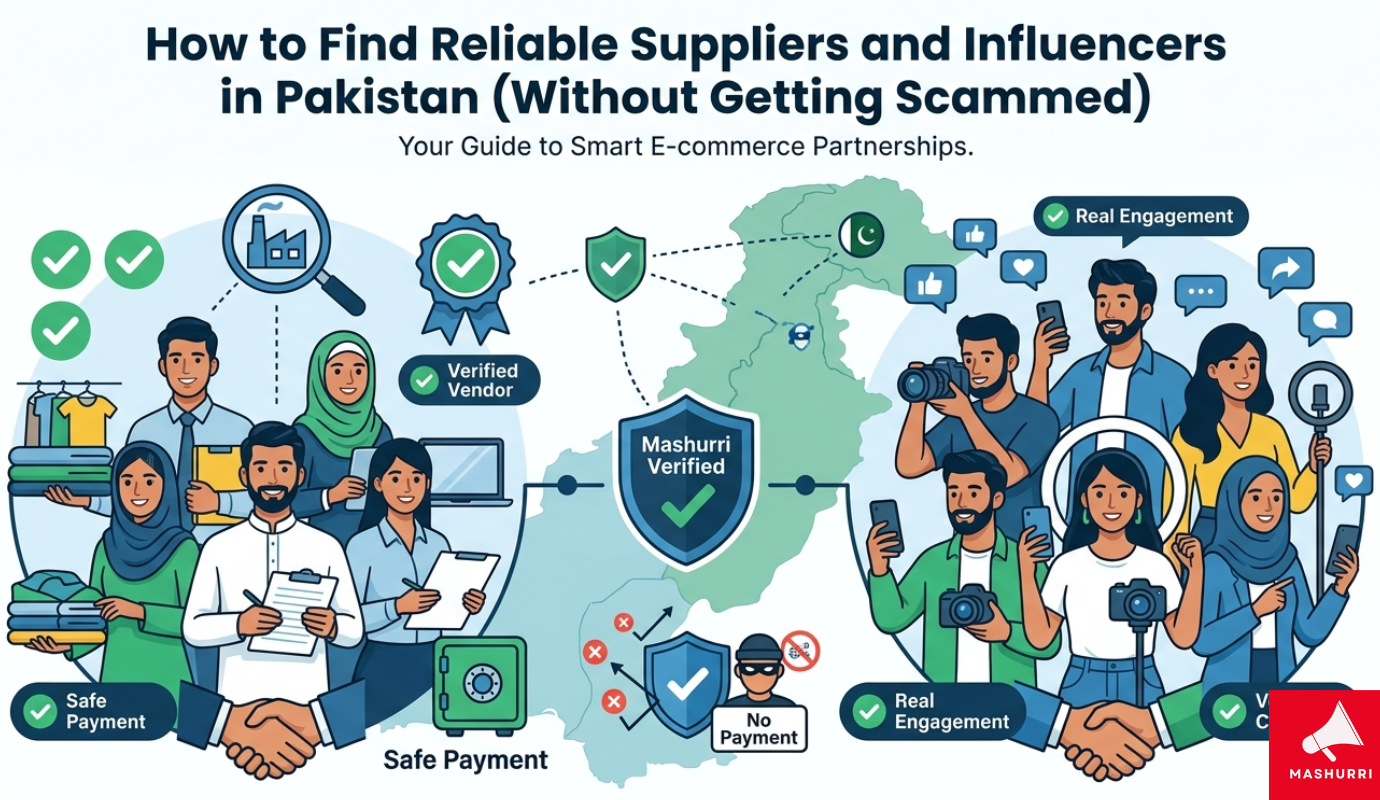
Use Verified Channels. This Is The Biggest Shortcut. Instead Of Cold-messaging Strangers On Facebook And Hoping For The Best, Work Through A Verified Vendor Marketplace Where Suppliers, Manufacturers, And Logistics Partners Are Pre-vetted. A Platform Like Mashurri Includes Exactly This — A Curated Directory Of Checked Vendors — Which Removes Most Of The Guesswork And The Worst Of The Risk Before You Ever Send Money.
Part 2: Finding Influencers Who Actually Deliver
Influencer Marketing Genuinely Works In Pakistan — When You Pick The Right Person. The Problem Is That Follower Count Is The Easiest Thing To Fake And The Worst Thing To Judge By.
The Common Influencer Problems
Fake Or Bought Followers. Big Number, No Real People Behind It. Your Post Reaches Almost No One Who'll Buy.
Dead Engagement. They Have Followers, But Nobody Likes, Comments, Or Acts. A "100k" Account With 50 Likes Per Post Is A Warning, Not An Opportunity.
Take The Money, Ghost The Work. Payment In, Then Excuses, Delays, Or A Single Half-hearted Post.
Audience Mismatch. Their Followers Are Real And Engaged — But They're The Wrong People For Your Product, So Nothing Converts.
How To Vet An Influencer Properly
Look At Engagement, Not Follower Count. A Creator With 8,000 Highly Engaged, Local Followers Often Outperforms One With 100,000 Passive Ones. Check The Ratio Of Likes And Comments To Followers, And Read The Comments — Are They Real?
Match The Audience To Your Product. Their Followers Should Be The People Who'd Actually Buy What You Sell. A Fitness Creator Is Wasted On A Wedding-jewellery Brand.
Ask For Past Results. Genuine Creators Can Show Examples Of Campaigns They've Run And The Response They Got. Vague Answers Are A Red Flag.
Start With One Small Collaboration. Test With A Single Post Or A Low-cost Deal Before Committing To A Big Campaign. Measure The Traffic And Sales It Actually Drives.
Agree On Deliverables In Writing. Exactly What They'll Post, When, On Which Platform, And What You're Paying For. No Ambiguity.
Use A Verified Marketplace. Just As With Suppliers, The Safest Route Is A Vetted Pool. Verified Influencer Marketplaces Let You Skip The Cold DMs And Unreliable Middlemen, And Connect Directly With Local Creators Whose Followings And Results Have Been Checked — Which Is Precisely What Mashurri's Influencer Marketplace Is Built To Do.
The Pattern Behind Both Problems
Notice The Common Thread: Nearly Every Scam Relies On You Dealing Blindly With A Stranger And Paying Before You Have Proof. The Defences Are The Same Too — Verify Before You Trust, Start Small, Get It In Writing, And Wherever Possible Work Through Channels Where Someone Has Already Done The Vetting For You.
That Last Point Is Why Curated, Verified Marketplaces Have Become So Valuable For Pakistani Sellers. They Don't Just Save Time; They Remove The Single Biggest Source Of Loss For New Businesses — The Unreliable Partner You Couldn't Have Spotted On Your Own.
Quick Red-Flag Checklist
Walk Away, Or Proceed Very Carefully, If You See:
Pressure To Pay The Full Amount Upfront, Fast
Refusal To Send A Sample Or Show Real References
Prices That Are Suspiciously Far Below Everyone Else
Vague, Evasive Answers About Past Work Or Results
An Online Presence That Looks Polished But Has No Genuine Engagement Behind It
Reluctance To Put Terms In Writing
Any One Of These Isn't Always Fatal. Two Or More Together Usually Means: Keep Your Money.
The Bottom Line
The Difference Between Sellers Who Scale And Sellers Who Burn Out Often Comes Down To One Thing — The Partners They Chose. You Can't Build A Reliable Business On Unreliable People, No Matter How Good Your Product Or Store Is.
Vet Before You Trust. Start Small. Get It In Writing. And Lean On Verified Channels So The Riskiest Part Of E-commerce Becomes The Safest. Do That, And You'll Skip The Painful, Expensive Lessons That Catch Out Almost Everyone Else.
If You'd Rather Work With Pre-vetted Suppliers And Verified Local Influencers From The Same Dashboard Where You Run Your Store, Mashurri Brings Both Marketplaces Together With The Rest Of Your Business. Get Started Free And Build On Partners You Can Actually Trust.
Build Smart, Not Sorry. Find More Seller Guides On The Mashurri Blog.